Shy, introverted or both?
A shy child wants to join in but feels nervous. An introverted child may feel perfectly happy with a smaller circle and quiet time to recharge. The difference matters, because the answer is different. A shy child often benefits from gradual practice. An introverted child mostly needs settings that suit them. Many kids are a bit of both, and neither needs to be fixed.
What helps, based on what parents and educators suggest
Advice from guides such as The Old Schoolhouse and the Center for Children and Youth is general parenting guidance rather than research, and the tips below reflect advice commonly given across homeschool and parenting sources.
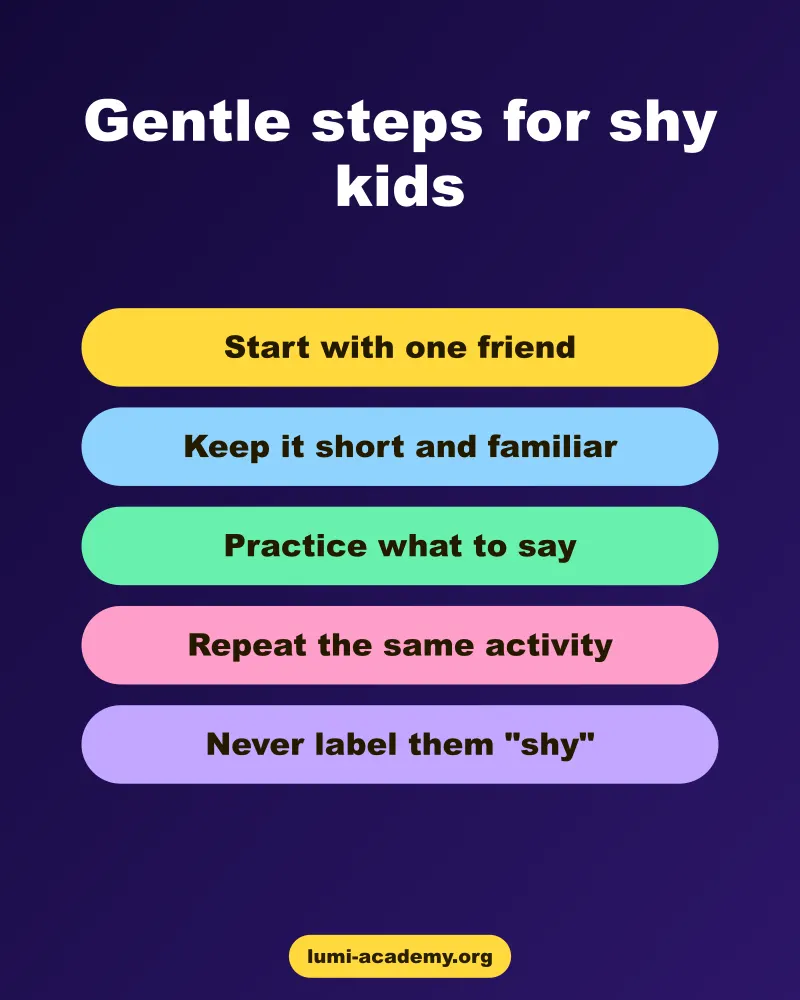
- Start with one. A one-on-one playdate with one child is easier than a crowd. Quality matters more than quantity.
- Keep it short and predictable. An hour at a familiar place is a good start. Surprises are harder for nervous kids.
- Repeat, repeat, repeat. A weekly activity with the same faces lets a child warm up. Stable, recurring groups work better than occasional big outings.
- Use an interest as the bridge. A club about dinosaurs, LEGO or art gives kids something to talk about besides themselves.
- Practice ahead. Role-play a hello, ask-to-join and goodbye with toys or puppets. Suggest a few conversation starters.
- Arrive early. It is easier to join a room that is still filling up than to walk into a crowd.
- Let them watch. Some children join in after they have observed for a while. That is fine.
What to avoid
- Calling them "shy" in front of others. Labels tend to stick. Try "likes to watch first".
- Pushing them into a large group to "get over it".
- Filling every day with activities. Introverted kids need downtime.
- Answering for them. Pause and wait.
- Comparing them to a sibling or friend.
A gradual plan
| Week | Step |
|---|---|
| 1 to 2 | A short playdate with one familiar child at your home. |
| 3 to 4 | The same friend at a park or library, one to two hours. |
| 5 to 6 | Add a second child, or try a small class with a friend. |
| 7 to 8 | Join a weekly group. Arrive early and stay for the whole time. |
| After that | Add one new setting per term, if your child is ready. |
Online practice, with care
Some quiet kids find it easier to start friendships in writing. A parent-controlled, text-only space can be a gentle bridge, but it should supplement real contact, not replace it. Use our checklist for judging online communities and agree on family chat rules.
When to ask for help
If your child is very distressed in social settings, avoids all contact, or seems unhappy for long stretches, talk to your pediatrician or a child counselor. Shyness is normal. Persistent anxiety is something to take seriously.
- In Lumi Circles the kids' room is small by design: only kids in their own co-op and age room, shown by pet name.
- It stays off until you switch it on and approve your child.
- Try the lessons free for 48 hours so your child can learn at their own pace.
Start the free 48-hour trial. No card is needed for the 48-hour trial. Circles is part of the paid Academy and High plans.
Frequently asked questions
How do I help my shy homeschooled child make friends?
Start with one-on-one playdates, keep them short, repeat the same activity with the same children, use a shared interest and practice what to say beforehand.
Is it okay for my homeschooled child to be introverted?
Yes. Introversion is a temperament, not a problem. Choose smaller, quieter settings and protect downtime.
Should I force my shy child to join groups?
Pushing a child into big groups tends to backfire. Gradual, repeated exposure with a familiar friend works better.
When should I be concerned about my child's shyness?
If your child is very distressed, avoids all contact or seems unhappy for a long time, talk to your pediatrician or a child counselor.