Story Books
Short stories for kids, with a picture on every page
A short story with pictures is one of the best ways to get a child reading. It is short enough to finish in one sitting, so a child feels the reward of reaching the end. The pictures carry part of the story, so a reader who gets stuck on a word can look at the page and work it out. And because the whole thing takes a few minutes, it is easy to read the same story twice, which is how new readers build speed.
Lumi has 32 short Story Books and 10 Number Stories, each a printable PDF with a full illustration on every page. This guide looks at how to use short picture stories to build reading, and which ones fit which ages.
What makes a good short story for kids
- It is short enough to finish. Lumi's stories run 6 to 10 story pages.
- The words match the age. Toddler stories use one simple line per page. Stories for older kids use a few full sentences.
- The pictures help. Every page has a big illustration that matches what the words say.
- Something happens. Even the shortest stories have a small problem or a surprise at the end.
Short stories for ages 2 to 6
For the youngest readers, a story is mostly about rhythm and repetition. My Cat Sits opens with "My cat sits on the mat." Big and Small starts with "The elephant is very big." Short lines like these let a child point to each word as you read it, which teaches that print goes left to right and that each word on the page is a word you say.
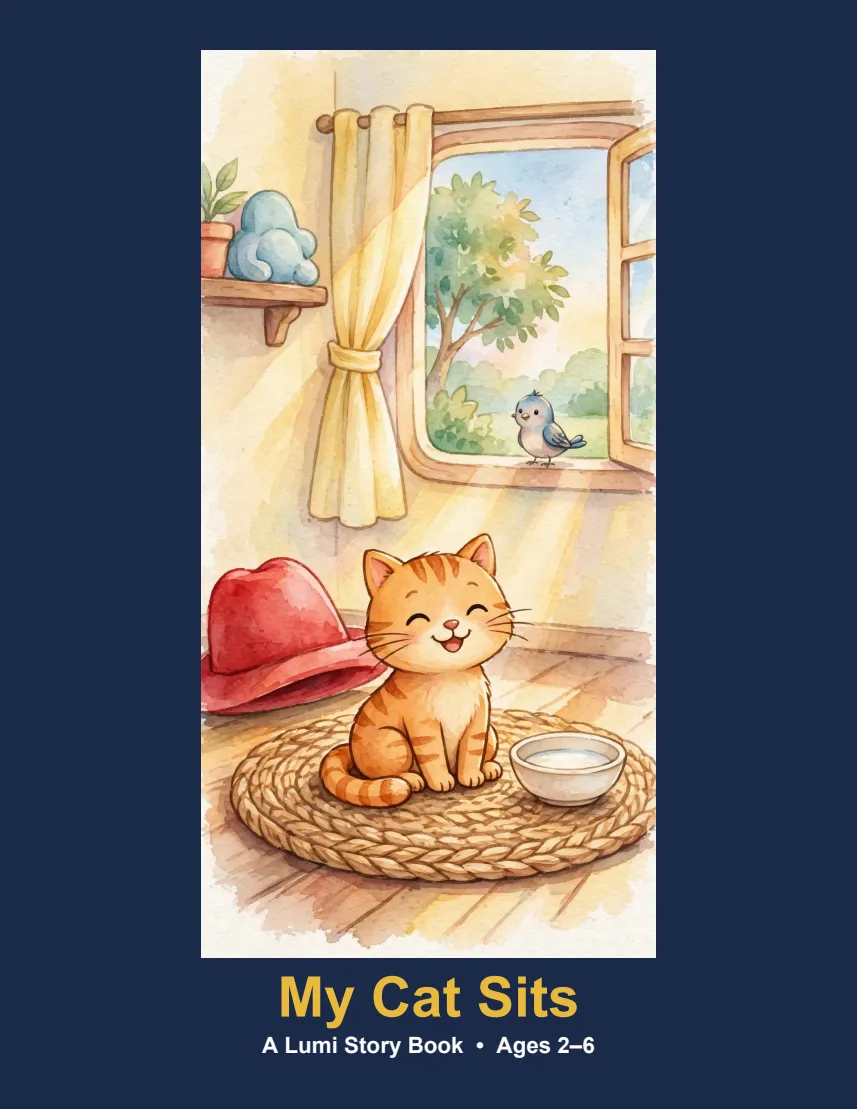 My Cat SitsStory Book, ages 2-6$3.99 PDF
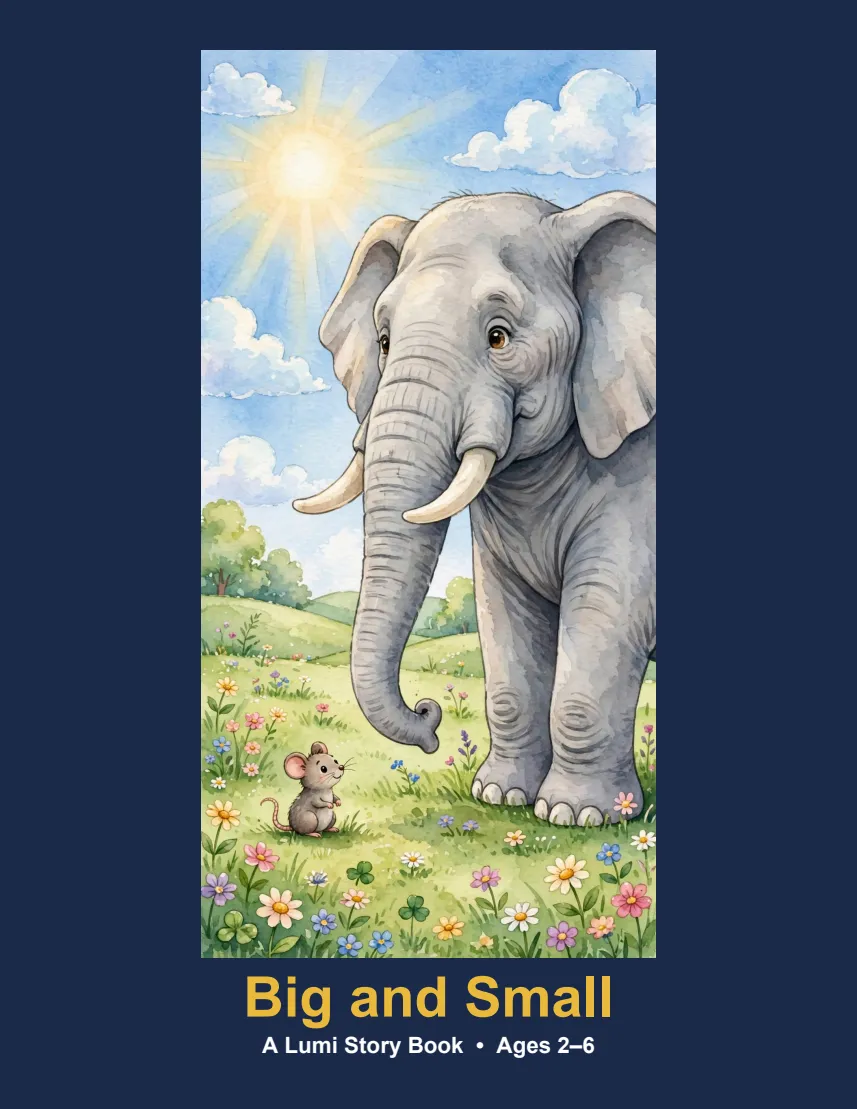 Big and SmallStory Book, ages 2-6$3.99 PDF
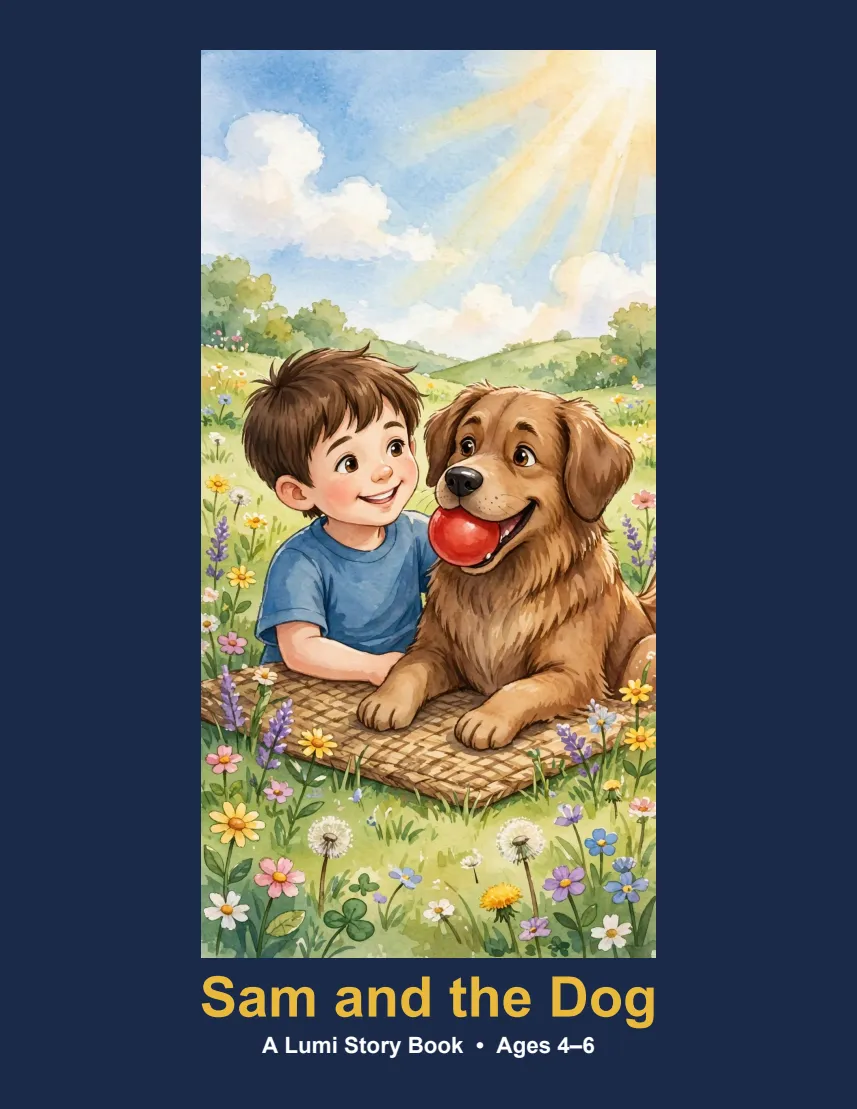 Sam and the DogStory Book, ages 4-6$3.99 PDF
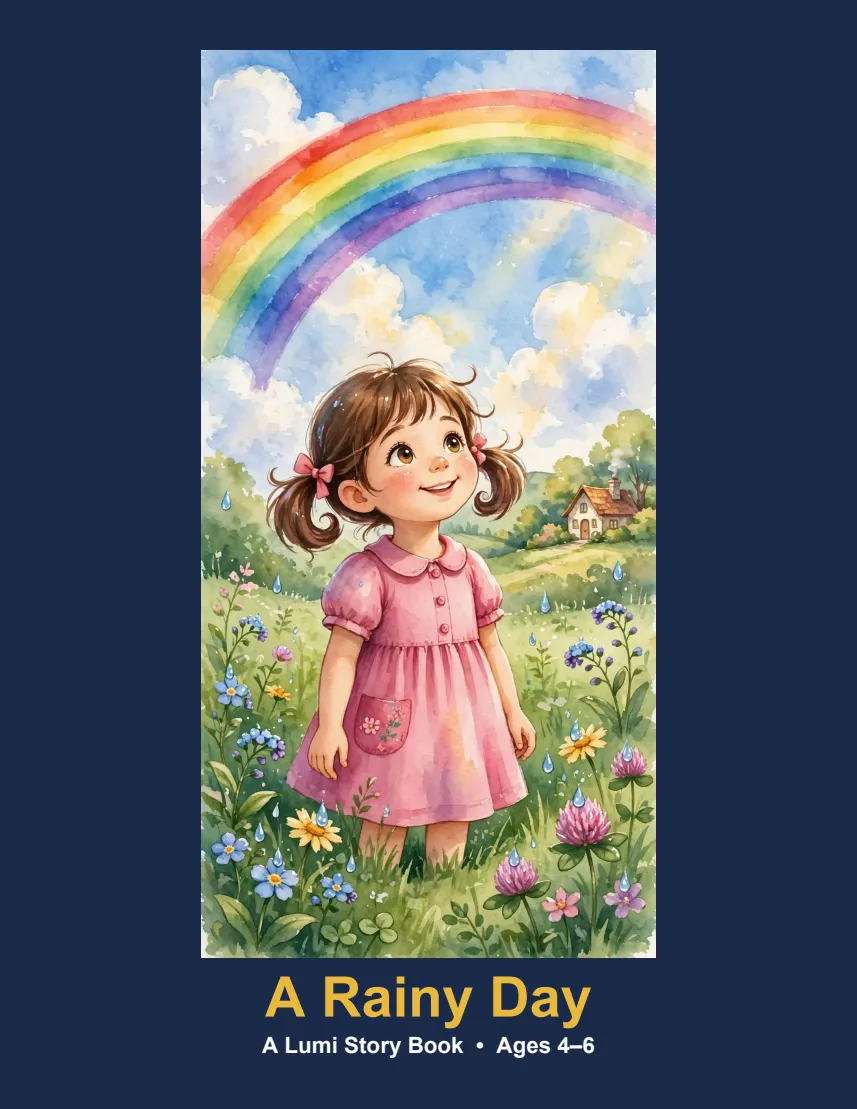 A Rainy DayStory Book, ages 4-6$3.99 PDF
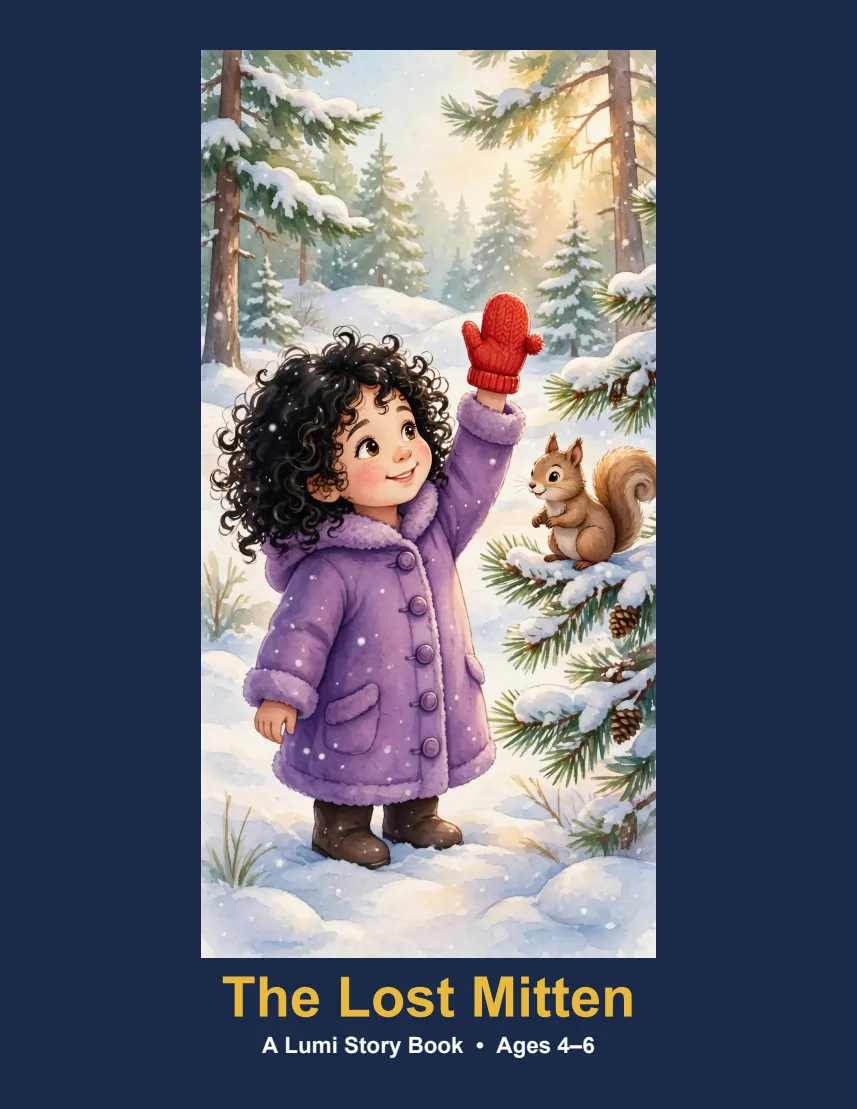 The Lost MittenStory Book, ages 4-6$3.99 PDF
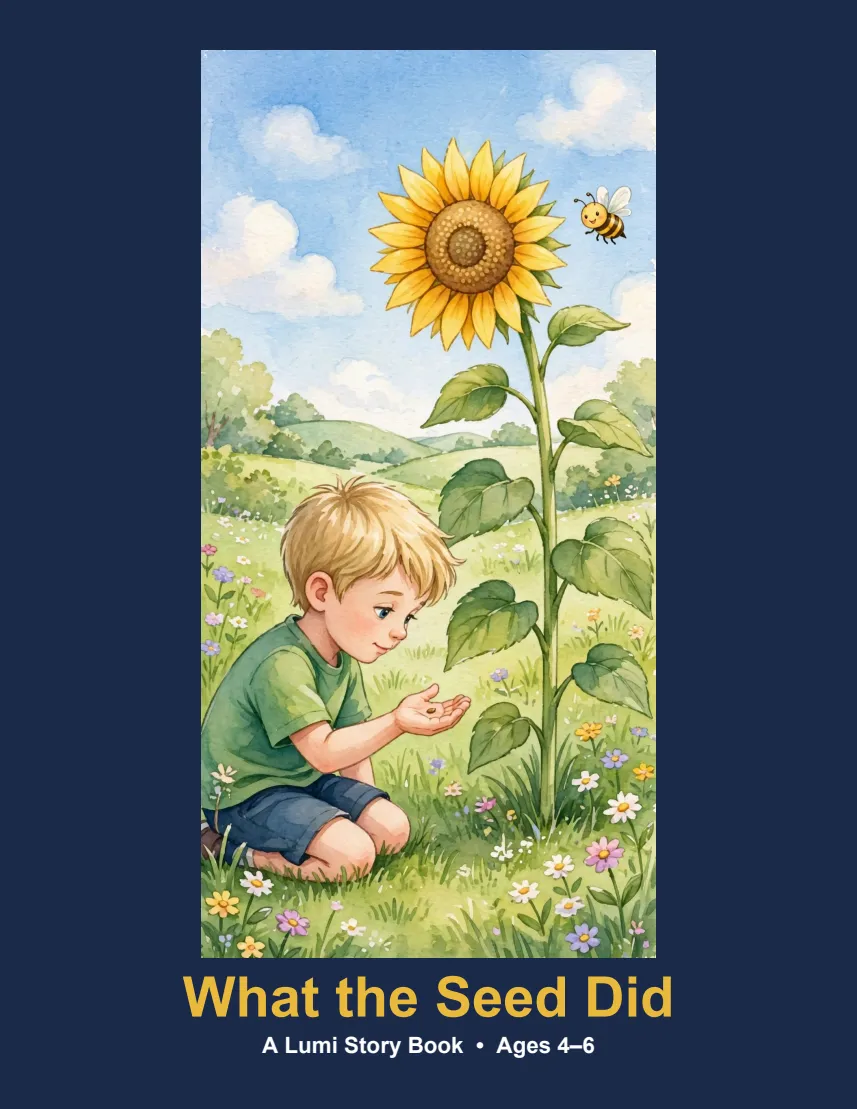 What the Seed DidStory Book, ages 4-6$3.99 PDF
Stories for ages 4 to 6 add a small problem. In The Lost Mitten, Nia has two red mittens and then only one. What the Seed Did starts with Theo holding one small seed. Sam and the Dog is built from short words like sat and mat that early readers can sound out.
Short stories for ages 7 to 9
Around second and third grade, children want real characters and real stakes. The Brave Climb begins, "Every kid in camp could climb the big oak tree except Omar." My Robot Friend starts when Sofia unwraps a small metal robot named Zip on her birthday. The Invisible Ink Club starts with Eli discovering that lemon juice, dried on paper, turns invisible. Each one is still short, 7 or 8 story pages, but the sentences are longer and the characters have to work something out.
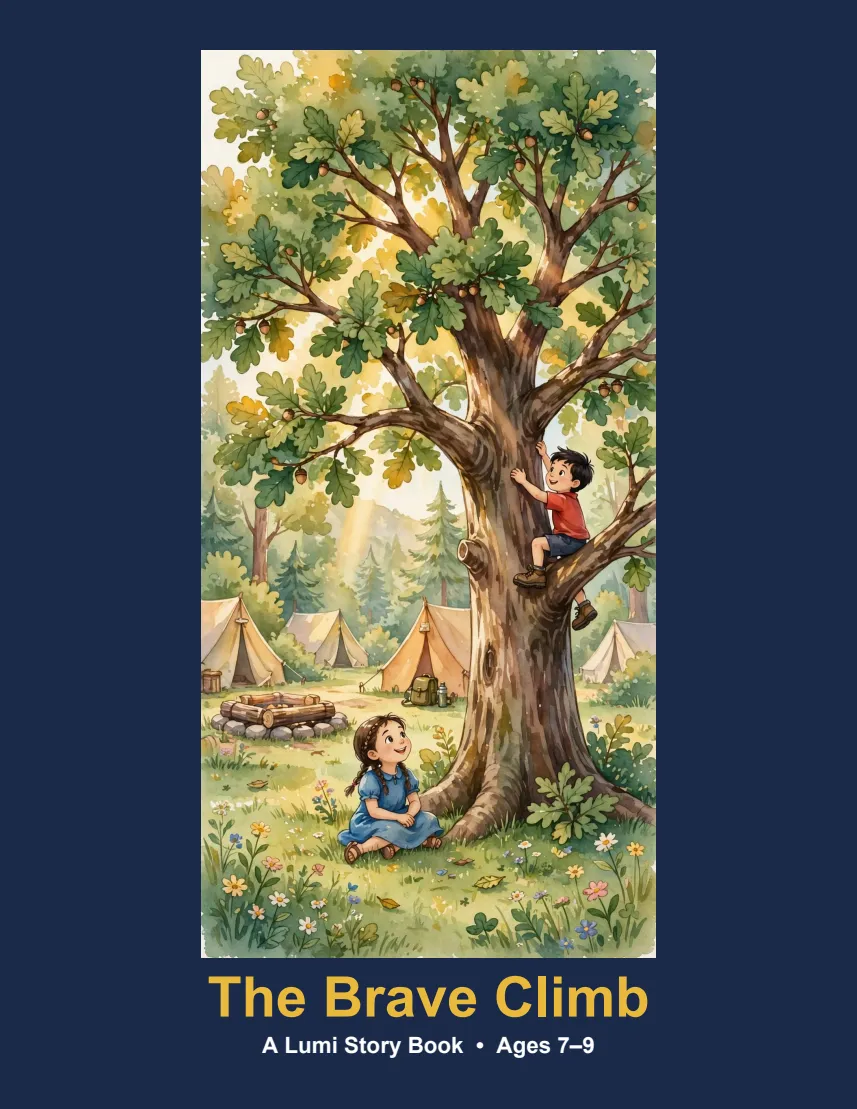 The Brave ClimbStory Book, ages 7-9$3.99 PDF
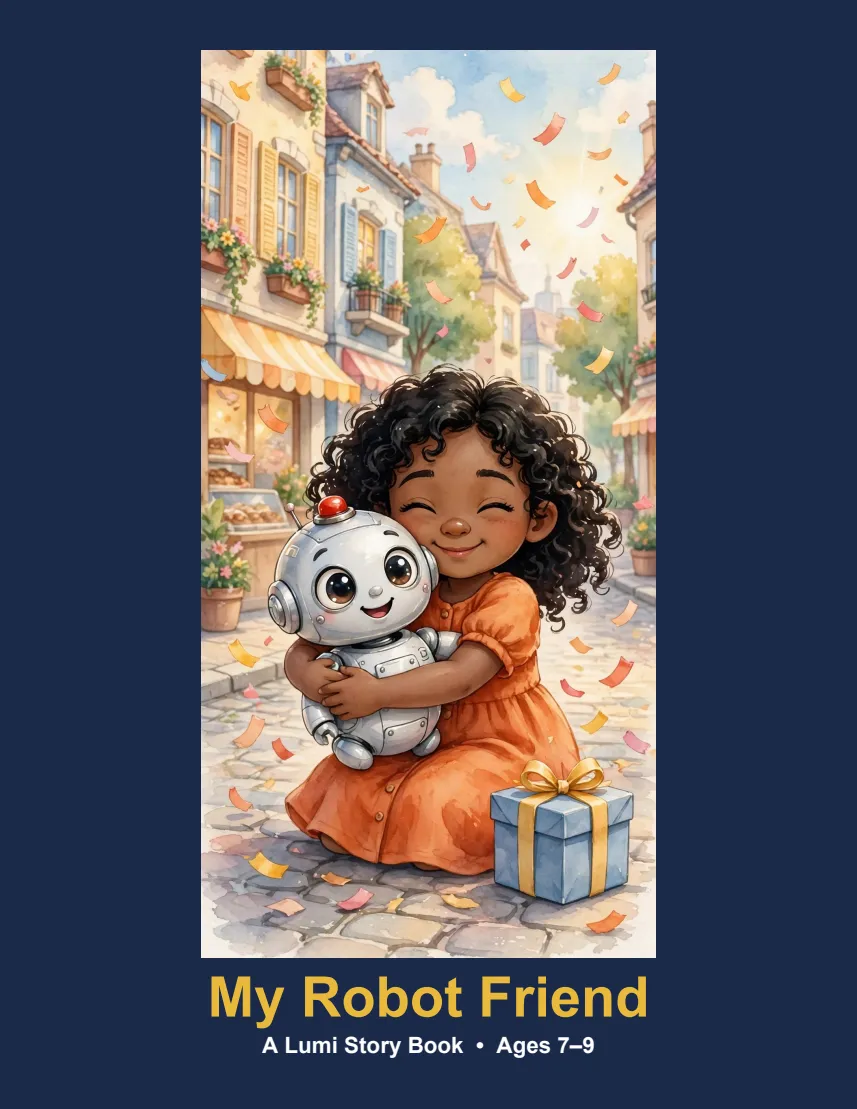 My Robot FriendStory Book, ages 7-9$3.99 PDF
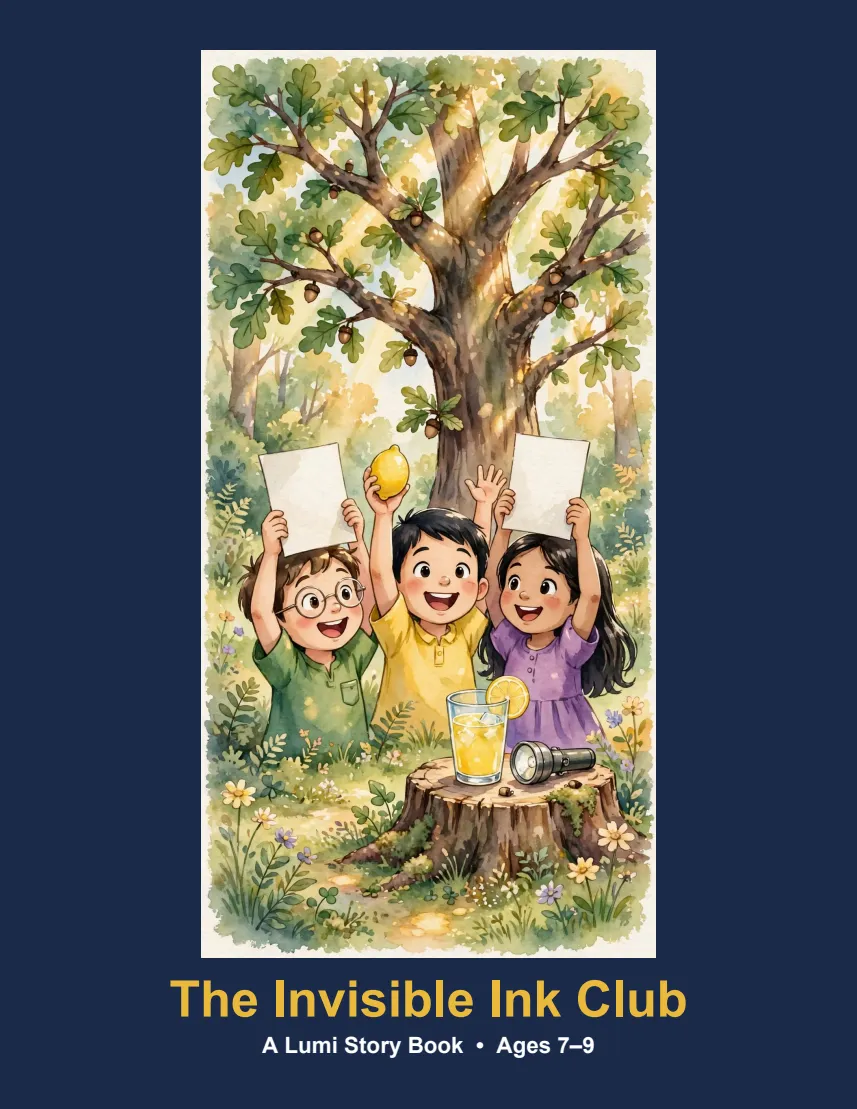 The Invisible Ink ClubStory Book, ages 7-9$3.99 PDF
 The Bridge That Fell Down TwiceStory Book, ages 7-9$3.99 PDF
 Who Works at NightStory Book, ages 7-9$3.99 PDF
Short stories for ages 9 to 13
Older kids still love a picture book, especially one that does not feel babyish. These stories have older characters and bigger ideas. Maya and the Code opens with Maya staring at the same error message for two hours. Thirteen Seconds is about a state record that has stood for eleven years. Margin of Error starts with a school poll that says Devon will win class president by twenty points. At 8 to 10 story pages, they work for reluctant readers who will not open a chapter book but will happily finish a short story.
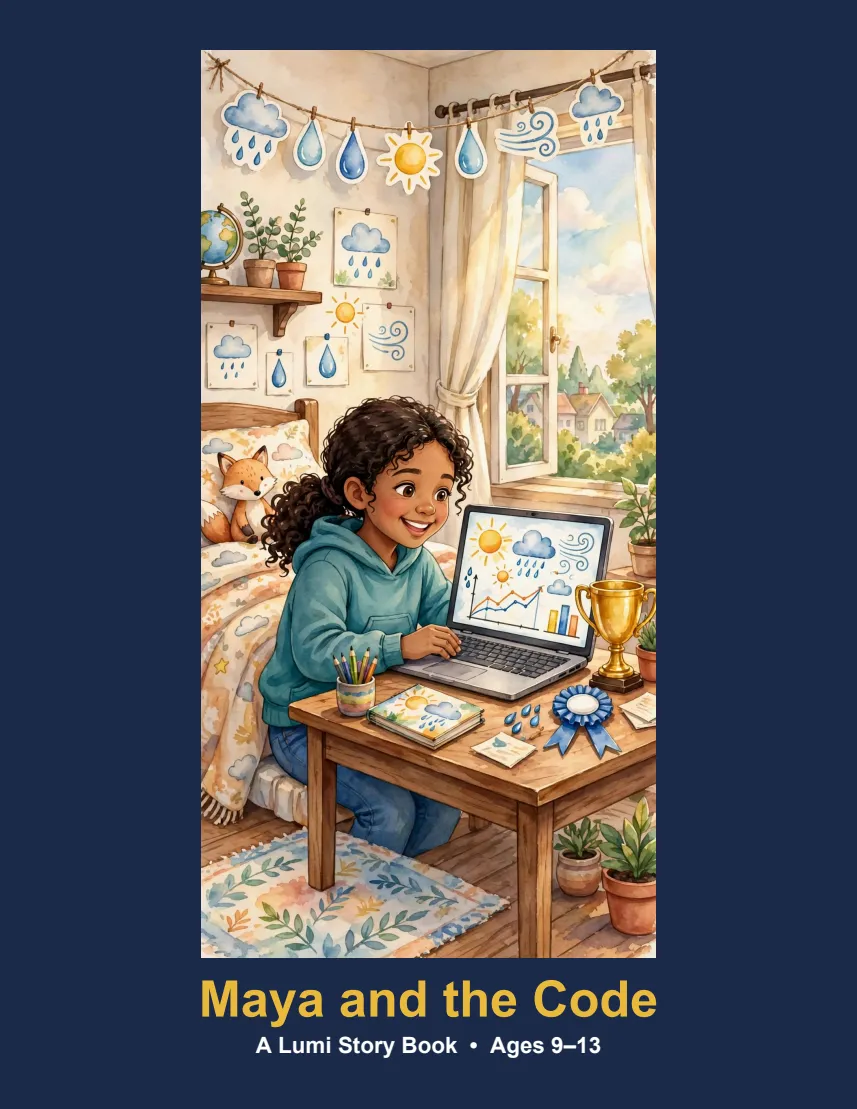 Maya and the CodeStory Book, ages 9-13$3.99 PDF
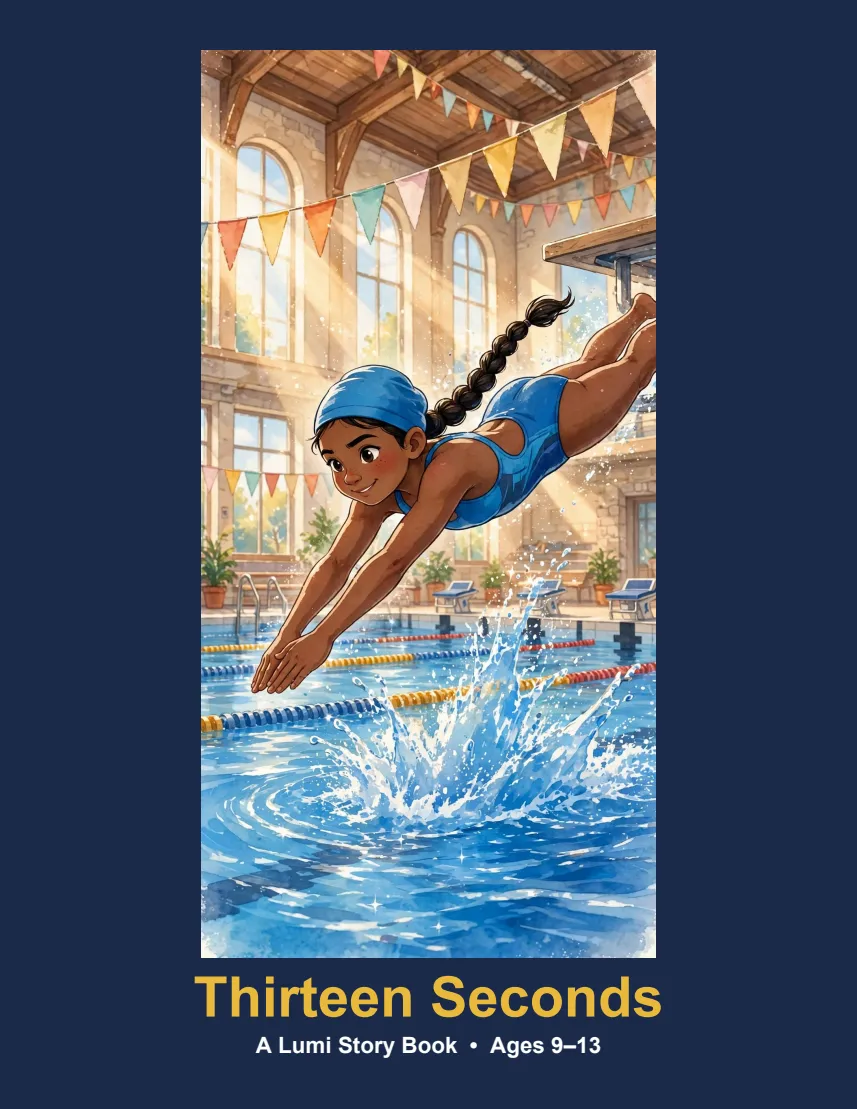 Thirteen SecondsStory Book, ages 9-13$3.99 PDF
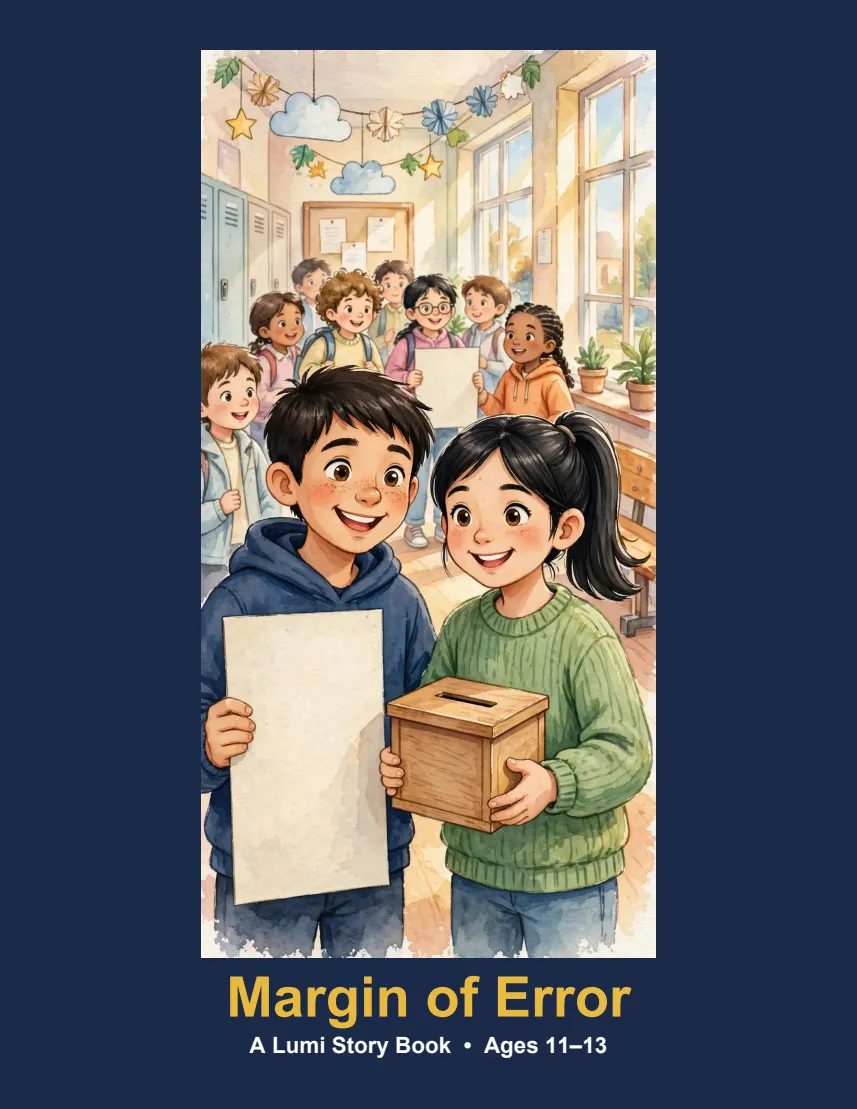 Margin of ErrorStory Book, ages 11-13$3.99 PDF
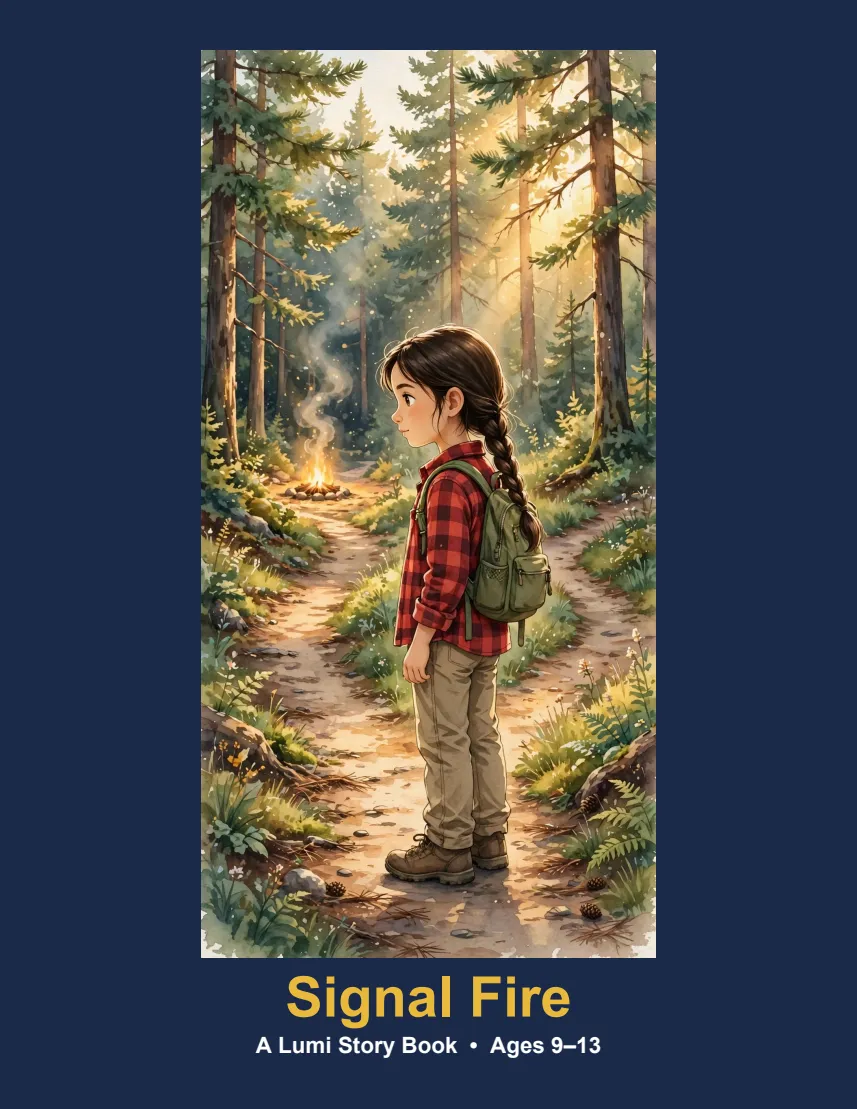 Signal FireStory Book, ages 9-13$3.99 PDF
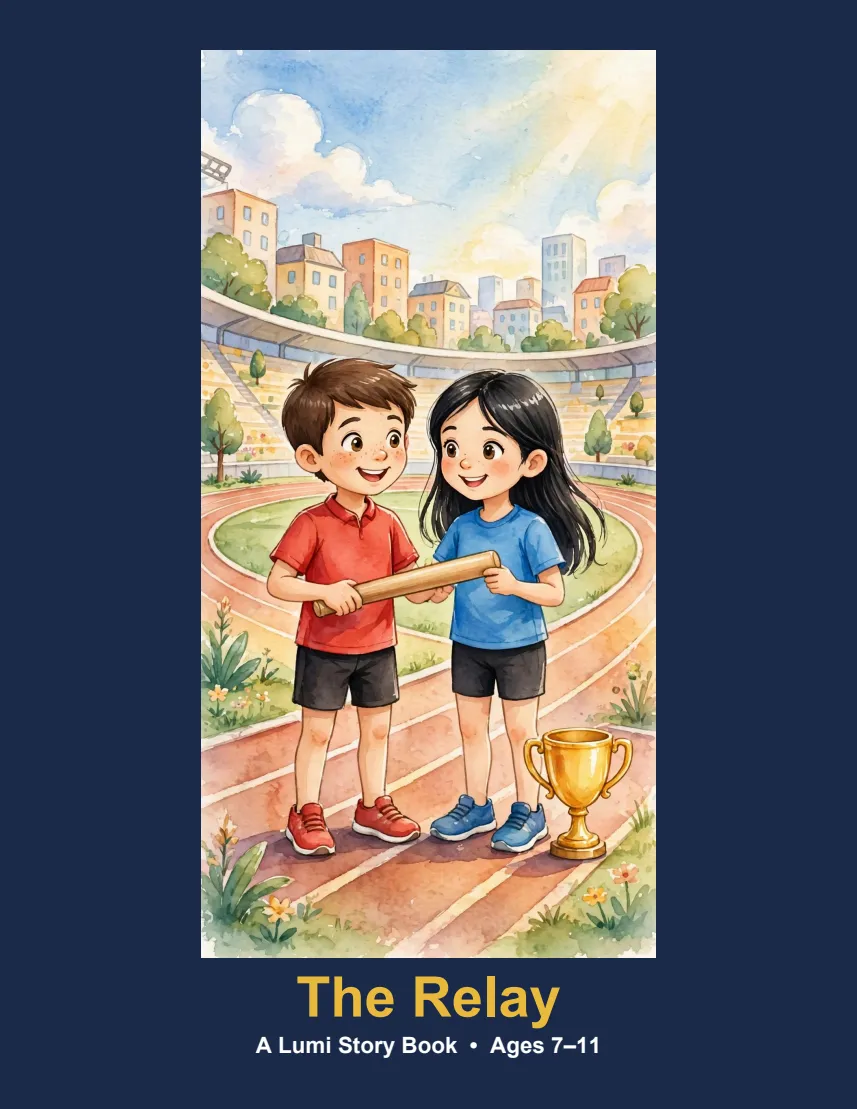 The RelayStory Book, ages 7-11$3.99 PDF
Questions to ask after a short story
Talking about a story builds comprehension faster than reading alone. Try two or three of these after you finish:
- What was the problem in the story, and how did it get solved?
- Which picture was your favorite, and what was happening in it?
- How did the main character feel at the start? How about at the end?
- What do you think happens the day after the story ends?
- If you were in the story, what would you have done differently?
Stories with math built in
The Lumi Number Stories are short picture stories where the plot is a math problem. In Pizza Party, Dad orders 2 pizzas with 8 slices each. In The Coin Jar, Maya starts with 5 pennies. Each one has Try this! questions on the pages and an answer key at the back. See math picture books for the full set.
Read on a screen or print
Every story is a PDF, so it opens on a tablet, phone or computer. Printing gives you a copy a child can hold, flip back through and keep by the bed. For more on the whole collection by age, see printable story books for kids, and for calm stories at the end of the day, see bedtime stories for kids.
Questions parents ask
How short are the stories?
Each Lumi Story Book has 6 to 10 story pages. The stories for ages 2 to 6 have one short line per page, and the stories for ages 9 to 13 have a few sentences per page.
Does every page have a picture?
Yes. Every story page has a large full-color illustration, with the words underneath.
What ages are the short stories for?
Ages 2 to 13. Each book lists its age range, like ages 2 to 4, 4 to 6, 7 to 9, 9 to 13 or 11 to 13.
Are they PDFs?
Yes. Each story is a $3.99 PDF on US Letter paper. Open it on a tablet or computer, or print it at home.
Can my child read them alone?
Many children can read the stories for their age on their own, especially the ones for ages 7 and up. Younger children usually read with a grown-up and join in on the words they know.
Do the stories have questions?
The Number Stories have Try this! math questions on the pages and an answer key at the back. The Story Books are stories only, so you can ask your own questions as you read.
Find your book
Every Lumi book is a PDF you download right after you pay. Print at home as often as your family needs.
See all 102 books