Pre-K
Preschool workbooks for letters, sounds and first words
Preschool is not about worksheets. It is about noticing letters on cereal boxes, hearing that ball and bat start the same way, and asking to read the same book for the fifth night in a row. A good preschool workbook supports that curiosity with short, playful pages instead of drills. Lumi makes two printable Pre-K workbooks for letters and sounds, plus picture books to read together.
The two Lumi Pre-K workbooks
Spelling Quest Pre-K: First Sounds
This book covers 180 first sounds over 30 weeks, six a week. The first nine weeks introduce all 26 letters, three at a time: M, S and A, then T, P and I, then N, C and O, and so on. After that come letters that sound alike, like B and P or T and D, and then weeks of first sounds grouped by theme: food, toys, things outside, the body, colors and family words.
Each week has two pages. The first shows the week's letters, the sound each makes and a picture word, with big letters to trace. The second has circle-the-first-letter, match-the-sound and trace-and-say activities, ending with a star to color.
Reading Quest Pre-K: First Letters, Sounds, Blending and First Words
This is the shorter book, 36 pages with 53 lessons and 253 questions in three units. Unit 1 covers the letters S, A, T, P, I and N with their sounds and first blending. Unit 2 adds more letters, blending three-letter words, and the first sight words. Unit 3 is a short set of sight words to finish. A grown-up reads each prompt aloud.
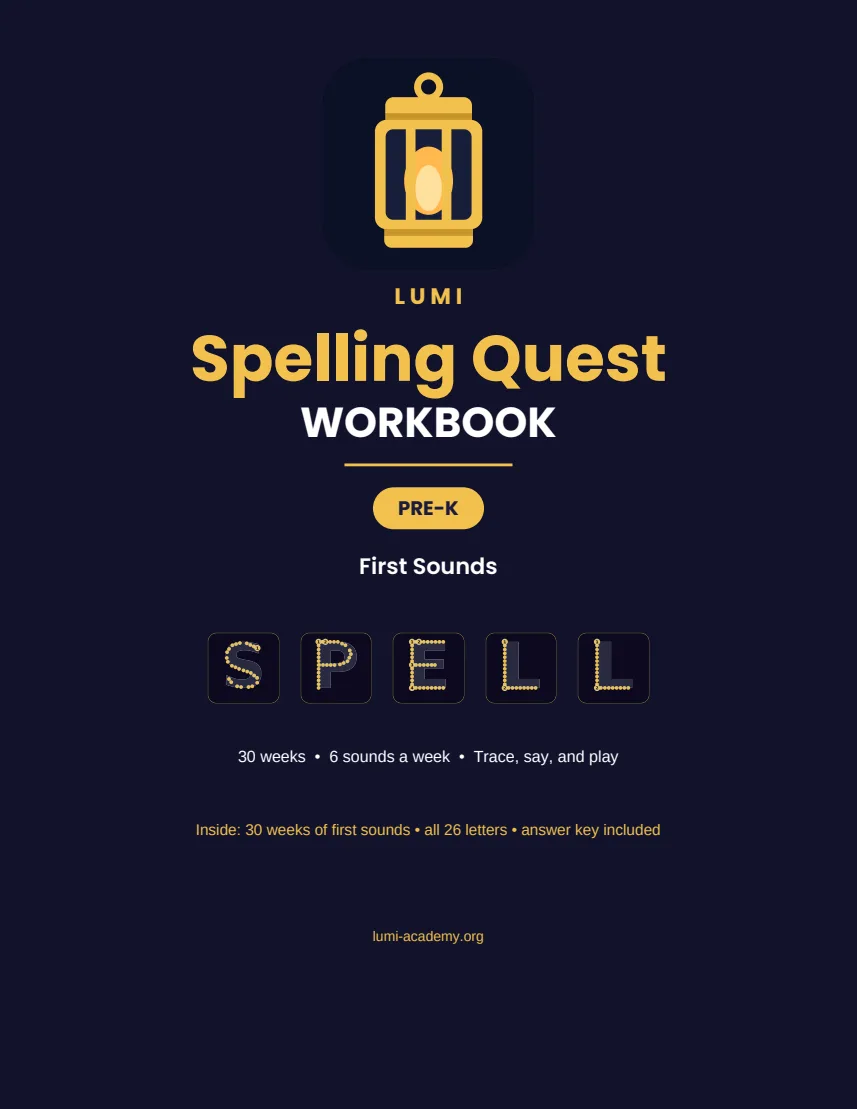 Spelling Quest Workbook: Pre-KFirst Sounds$12.99 PDF
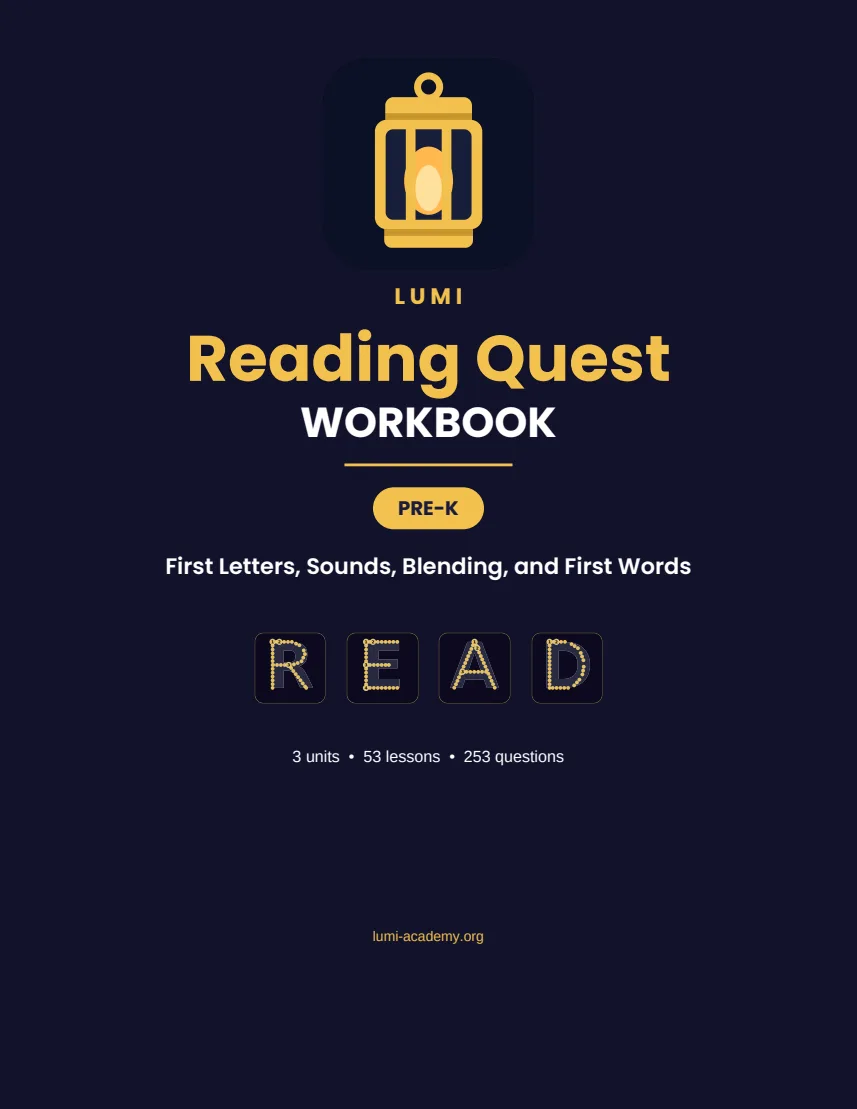 Reading Quest Workbook: Pre-KFirst Letters, Sounds, Blending and First Words$12.99 PDF
Why start with sounds, not letter names
Many preschool alphabet books teach letter names: A is for apple, B is for ball. Names matter, but reading runs on sounds. A child who knows that S says sss and A says aah can blend sat long before they can recite the alphabet in order. Both Lumi Pre-K books put the sound first and the name second, and they teach a few common letters early so blending can start sooner.
A gentle routine for 3 to 5 year olds
- Pick a calm moment. After breakfast or before quiet time works better than right before bed.
- Read the page aloud together. Point at the letter, say the sound, then let your child say it back.
- Let them trace with a crayon or marker. Wobbly lines are fine. The goal is noticing the shape.
- Stop after one page. Leave them wanting more. Come back tomorrow.
- Find the sound in real life. If today was S, look for things that start with sss on a walk.
That is it. Five to ten minutes, most days of the week, adds up to every letter and sound by the end of the year.
What makes a good preschool page
- One idea per page. A page about the letter T is only about T.
- Big, clear letters with plenty of white space so small hands have room.
- Things to do, not just look at: circle, match, trace, say.
- Review built in. The spelling book comes back to earlier letters in weeks 10, 20, 29 and 30.
- A reward that is not a screen. Coloring a star at the end of each week is enough.
See the sounds free. The Pre-K letter sounds page lists every week's letters and picture words at no cost. The workbook turns them into printable pages with tracing, activities and an answer key.
Read together every day
Workbooks build skills, but stories build readers. Lumi's printable story books include picture books written for the youngest listeners, like Sun, Sun, Fun!, I See Colors, Big and Small and Ten Little Ducks. Each is a short story told a line or two at a time, with a big picture on every page and a note for grown-ups on what to point at and ask.
For early numbers, the Number Stories are picture books where the story is a math problem. The Apple Tree, Birthday Balloons and The Seed Garden are written for ages 2 to 6. Each picture book is $3.99.
When to move up to kindergarten books
Your child is probably ready for the kindergarten workbooks when they know most letter sounds, can blend a few three-letter words, and enjoy sitting for a ten-minute page. There is no rush. Many families run the Pre-K books for a full year and start kindergarten books the following fall, while others move up in spring. Both are fine.
If you want extra sound practice before then, our guide to phonics workbooks shows how the Pre-K, kindergarten and Grade 1 books build on each other.
Questions parents ask
What age are Lumi's Pre-K workbooks for?
Most children start them around age 4, and some keen 3-year-olds enjoy the letter pages. If your child already blends simple words like cat and sun, the kindergarten books are a better fit.
Does my preschooler need to write?
Only a little. The pages ask for tracing letters, circling the first letter of a word and drawing lines to match. A grown-up reads everything aloud, and holding a crayon is enough to start.
How long should a preschool workbook session last?
Five to ten minutes is plenty. Stop while it is still fun. One page a day adds up to a full year.
Is there a Pre-K math workbook?
Not yet. The Pre-K books are spelling and reading. For early numbers, the Number Stories picture books like The Apple Tree and Birthday Balloons are written for ages 2 to 6.
Can I print the pages more than once?
Yes. Print as many copies as your own family needs, so you can redo a favorite page or save one for a younger child.
Find your book
Every Lumi book is a PDF you download right after you pay. Print at home as often as your family needs.
See all 75 books