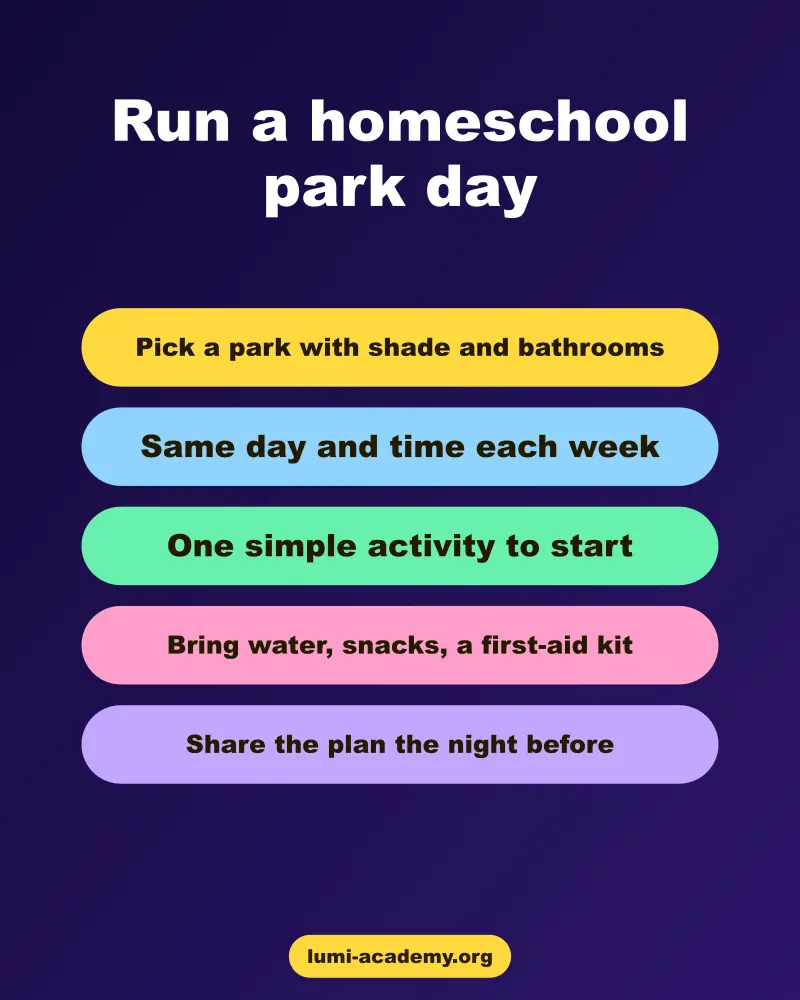
Why a park day is the best way to start
A park day is the lowest-pressure homeschool gathering there is. There is no building to rent, no curriculum to plan and no commitment beyond showing up. Many co-ops begin as a regular park day, and many friendships do too. Guides on helping homeschoolers find friends commonly recommend the same thing: a regular, repeated time kids can count on.
Choosing the park
- Shade and a covered shelter for rain or heat.
- Bathrooms and drinking water nearby.
- A playground plus open space for games.
- Easy parking and a safe edge for little ones.
- Somewhere you can be loud without bothering anyone.
Pick a rhythm and keep it
Same day, same time, same place, every week or every other week, is what makes a park day grow. Weekday mornings suit families who homeschool during school hours. Saturday is better for families with working parents. Start with an eight-week trial so no one feels locked in.
A simple schedule
| Time | Activity |
|---|---|
| 10:00 | Arrival, free play and chat. |
| 10:45 | One organized activity: a game, a nature scavenger hunt or a read-aloud. |
| 11:30 | Snack and picnic. |
| 12:15 | More free play, or an optional older-kids game. |
| 12:45 | Clean up the shelter and say goodbyes. |
Activity ideas by age
- Little ones: bubbles, sidewalk chalk, sandbox play, a parachute game.
- Elementary: nature scavenger hunt, tag variations, a stick-and-stone building contest, kickball.
- Tweens and teens: ultimate frisbee, a mini tournament, a book swap, a sketch walk.
- All ages: a "show and share" circle where kids bring something to show.
What to bring
Water, snacks, sun protection, a first-aid kit, a blanket, a few balls and a list of emergency contacts for any child whose parent is not staying. Keep it light.
Keep it going
- Post the date and weather plan the night before.
- Welcome new families at the gate and introduce them to someone.
- Rotate who plans the activity so one parent does not burn out.
- Add a small step each season: a book club, a nature journal day, a trip.
- When the group grows, move toward a first co-op meeting.
Meeting new families in public is a good way to start, and our co-op finder guide covers what to ask before you join something more formal.
Rain, heat and other plan Bs
Decide your weather rule when you set the schedule. A covered shelter solves most rain problems, but if you do not have one, name a backup, such as a library room or a family's garage. For hot days, move to the shade and add water play. Call it off for storms, and post the decision by an agreed time, so nobody drives across town for nothing. Always keep an adult within sight of any child near water or a road.
- Post each park day in Circles and collect RSVPs.
- Let families sign up to bring snacks, so one parent is not doing it all.
- Try the lessons free for 48 hours for the rest of your week.
Start the free 48-hour trial. Circles opens with a paid Lumi Academy or Lumi High plan; the free 48-hour trial lets you try the lessons first, no card needed.
Frequently asked questions
How do you organize a homeschool park day?
Pick a park with shade and bathrooms, choose a regular day and time, start with a simple schedule and one activity, share the plan the night before and welcome new families.
How often should a homeschool park day happen?
Weekly or every other week works best, at the same time and place so families can count on it.
What should you bring to a homeschool park day?
Water, snacks, sun protection, a first-aid kit, a blanket, a few balls and emergency contacts for children whose parents are not staying.
How do you grow a park day into a co-op?
Add small steps such as a book club, a nature journal day or a guest teacher, and hold a first co-op meeting when families are ready.